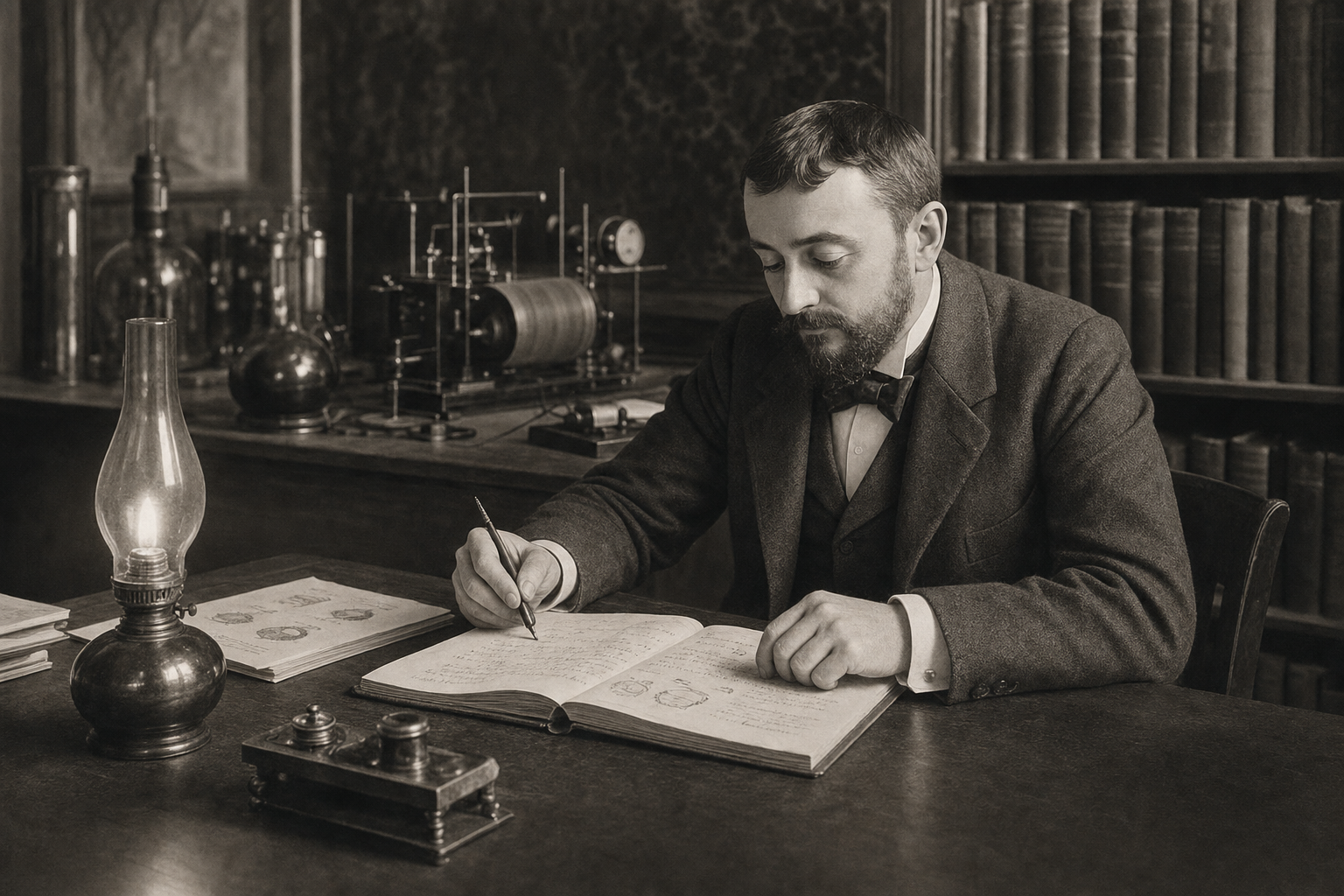
The question behind the question
When someone sits down to take an intelligence test, they are rarely thinking about measurement theory. They want a number. They want to know where they stand. The test, with its timed puzzles and pattern sequences, seems to promise exactly that: a clean, objective answer to a question that has nagged at human beings since at least the moment we started sorting each other into categories.
But the number that comes out the other end is not a simple readout of some fixed cognitive quantity, the way a thermometer reads temperature or a scale reads weight. It is a score on a particular set of tasks, designed by particular researchers, normed against a particular population, at a particular moment in history. Understanding what that score actually means, and what it does not mean, is one of the more genuinely interesting problems in all of psychology. It is also, increasingly, a practical matter for anyone navigating a world where intelligence tests shape educational placement, career opportunities, and clinical diagnoses.
What Alfred Binet was actually trying to do
The story of intelligence testing begins not with a theory of intelligence but with a bureaucratic problem. In 1904, the French Ministry of Public Instruction asked Alfred Binet, a psychologist at the Sorbonne, to develop a method for identifying children who were struggling in school and needed additional support. Binet, working with his collaborator Théodore Simon, was not trying to rank children from smartest to dullest. He was trying to find a practical tool for a practical problem: which children were falling behind, and how far behind were they?
The scale Binet and Simon published in 1905 was deliberately atheoretical. Binet distrusted grand claims about the nature of intelligence. He was skeptical of the craniometry that had dominated the previous generation of research, the measuring of skull sizes and brain weights in the hope of finding the seat of genius. What he wanted instead was a set of tasks, arranged by difficulty, that would reveal how a child’s reasoning compared to other children of the same age. The concept he introduced, mental age, was a practical shorthand, not a metaphysical claim.
Binet was also, and this matters, explicit about the limits of his tool. He worried that a test score would be mistaken for a fixed, innate quantity. He wrote that the scale was a rough guide, not a verdict. He did not believe that intelligence was a single thing that could be captured in a single number. He believed it was a collection of faculties, some of which his tasks measured and some of which they did not.
What happened next is one of the more instructive cautionary tales in the history of science. Binet died in 1911, before his scale had been widely translated or adopted. The American psychologists who took up his work, most notably Lewis Terman at Stanford, stripped away his caution and replaced it with confidence. Terman’s 1916 revision, the Stanford-Binet, introduced the intelligence quotient, the IQ score, and with it the idea that the test was measuring something real, stable, and largely innate. The tool Binet had designed as a practical aid became, in American hands, a theory of human worth.
What the tests actually measure
A century of psychometric research has produced a reasonably clear answer to the question of what intelligence tests measure, and it is both more and less than the early enthusiasts claimed.
The clearest finding is that performance on cognitive tests is correlated. If you do well on a test of verbal reasoning, you are more likely to do well on a test of spatial reasoning, and on a test of working memory, and on a test of processing speed. This correlation is not perfect, but it is robust, and it shows up across different populations and different types of tasks. The statistician Charles Spearman, working in the early twentieth century, identified this general factor and called it g. Most modern intelligence tests are designed, explicitly or implicitly, to measure g alongside more specific abilities.
What g represents at the level of the brain is still contested. Some researchers link it to the efficiency of neural processing, the speed and reliability with which information moves through the brain’s networks. Others emphasize working memory capacity, the ability to hold and manipulate information in mind. Still others argue that g is partly an artifact of the way tests are constructed, a statistical shadow cast by the particular tasks researchers have chosen to include.
What is less contested is that g, whatever it is, predicts a meaningful range of real-world outcomes. Higher scores on intelligence tests are associated with better academic performance, higher occupational attainment, better health, and longer life. These are not trivial associations. They are among the most robust findings in all of psychology. The predictive validity of intelligence tests is, by the standards of social science, genuinely impressive.
But predictive validity is not the same as completeness. A test can predict something without measuring everything that matters. And the history of intelligence testing is full of things the tests do not measure, things that turn out to matter quite a lot.
What the tests miss
The psychologist Robert Sternberg spent much of his career arguing that standard intelligence tests capture only one of three distinct forms of intelligence. Analytical intelligence, the kind that tests measure well, is real and important. But practical intelligence, the ability to navigate real-world problems, and creative intelligence, the ability to generate novel ideas, are also real and also important, and they are only weakly correlated with analytical scores. A person can score in the 99th percentile on a standard IQ test and still be remarkably poor at reading a room, managing a project, or finding an original solution to a problem that has no precedent.
Howard Gardner’s theory of multiple intelligences, which proposed distinct forms of musical, bodily-kinesthetic, interpersonal, and other intelligences, has been criticized by psychometricians for lacking empirical rigor. But the underlying intuition, that human cognitive capacity is not a single dimension, has never been convincingly refuted. The tests measure what they measure. They do not measure everything worth measuring.
There is also the question of what the tests are sensitive to that has nothing to do with cognitive capacity. Decades of research have documented the effects of test anxiety, stereotype threat, familiarity with the testing format, and the cultural assumptions embedded in specific items. A child who has grown up in a household full of books and abstract puzzles will find certain test items more familiar than a child who has not, not because the first child is more intelligent in any deep sense, but because the test is partly measuring exposure. The Flynn effect, the well-documented rise in average IQ scores across the twentieth century, suggests that whatever intelligence tests measure is substantially responsive to environmental change. Scores rose by roughly three points per decade in many countries, far too fast to be explained by genetic change. The most plausible explanations involve improvements in nutrition, education, and the spread of abstract thinking as a cultural practice.
This does not mean that intelligence tests are measuring nothing. It means that what they measure is entangled with environment, culture, and opportunity in ways that are difficult to fully disentangle.
The construct problem
At the heart of all of this is what philosophers of science call the construct problem. Intelligence is not a physical object. It is a theoretical construct, a concept invented to explain patterns in observed behavior. The question of whether intelligence tests measure intelligence is, in a strict sense, circular: we define intelligence partly in terms of what the tests measure, and we validate the tests partly by checking whether they predict the outcomes we associate with intelligence.
This circularity does not make the tests useless. It makes them something more specific than they are often presented as: they are reliable measures of a cluster of cognitive abilities that predict certain important outcomes, within certain populations, under certain conditions. That is a meaningful and valuable thing to be able to measure. It is not the same as measuring intelligence in some theory-neutral, culture-free, universal sense.
The distinction matters most when tests are used to make high-stakes decisions about individual people. A score that predicts average outcomes across a population does not tell you what any individual person is capable of. It does not capture motivation, persistence, creativity, or the particular combination of skills that makes someone effective in a specific domain. It is a useful signal, not a verdict.
Clinical tests versus online assessments
It is worth being clear about the difference between the tests that psychometricians have spent a century validating and the tests that most people actually encounter.
The gold-standard instruments, the Stanford-Binet 5, the Wechsler Adult Intelligence Scale, the Wechsler Intelligence Scale for Children, are administered individually by trained clinicians, typically over the course of one to two hours. They are normed on large, carefully stratified samples. They include subtests designed to measure specific cognitive abilities, and the scores are interpreted by a professional who can account for factors like test anxiety, fatigue, and the particular profile of strengths and weaknesses that a set of subtest scores reveals. These tests have extensive evidence bases, and their limitations are well understood by the people who use them.
Online intelligence tests, including the kind available on this site, are a different thing. They can give you a meaningful sense of how your performance on a set of cognitive tasks compares to others who have taken the same test. They can be a useful introduction to the kinds of reasoning that intelligence tests assess. But they are not clinical instruments. They are not individually administered. They are not interpreted by a professional who can account for the full context of your performance. If you are seeking a score for clinical, educational, or diagnostic purposes, an online test is not a substitute for a clinical evaluation.
That said, the questions that an online test raises are the same questions that clinical tests raise. What does this score mean? What does it predict? What does it miss? Those are questions worth taking seriously regardless of where you encounter them. You can explore how those questions play out in practice by reading about what makes an IQ test valid and standardised or by looking at the practical differences between online and in-person testing.
The honest version of what a score tells you
If you take an intelligence test and receive a score, here is what that score honestly tells you: on the day you took the test, under the conditions in which you took it, you performed at a level that places you at a particular point in the distribution of people who have taken the same test. That performance is correlated with certain cognitive abilities that predict certain outcomes. It is not a measure of your worth. It is not a ceiling on your potential. It is not a complete account of your mind.
Binet understood this. He built a tool for a specific purpose and tried to be honest about its limits. The century of overreach that followed his death is a reminder that the most dangerous thing you can do with a measurement instrument is forget what it was designed to measure.
The most useful thing you can do with an intelligence test score is treat it as one data point among many: interesting, worth understanding, but not the last word on anything that matters.
What the research actually supports
To summarize what a careful reading of the psychometric literature actually supports:
Intelligence tests reliably measure a cluster of cognitive abilities, anchored by the general factor g, that predict academic performance, occupational success, and certain health outcomes with meaningful accuracy. The tests are among the most predictively valid instruments in psychology. They are also sensitive to environmental factors, cultural familiarity, and test conditions in ways that complicate simple interpretations. They do not measure creativity, practical wisdom, emotional intelligence, or the full range of human cognitive capacity. They are more useful as population-level predictors than as individual verdicts.
The construct they measure is real in the sense that it has consistent, measurable effects on outcomes. It is not real in the sense of being a fixed, innate quantity that exists independently of the tests designed to measure it. It is a useful abstraction, like most of the things we measure in psychology, and like most useful abstractions, it is easy to misuse.
Understanding that distinction is, in the end, a kind of intelligence that no test has yet figured out how to score.
If you are curious how your own performance on a set of cognitive tasks compares, our online assessment offers a free starting point. Approach the score as what it is: a snapshot of one kind of reasoning, on one day, under one set of conditions.
FAQFrequently asked questions
What does an intelligence test actually measure?
Intelligence tests measure a cluster of cognitive abilities, including verbal reasoning, working memory, processing speed, and spatial reasoning, that tend to correlate with each other. Researchers call this general factor g. The tests predict academic and occupational outcomes well, but they do not capture creativity, practical judgment, emotional intelligence, or the full range of human cognitive capacity.
Are online IQ tests as accurate as clinical tests?
No. Clinical intelligence tests like the Stanford-Binet 5 or the Wechsler scales are individually administered by trained psychologists, normed on large stratified samples, and interpreted in context. Online assessments can give a useful sense of how your reasoning compares to others who have taken the same test, but they are not clinical instruments and should not be used for diagnostic or high-stakes educational decisions.
Why do IQ scores keep rising over time?
Average IQ scores rose by roughly three points per decade across the twentieth century in many countries, a phenomenon called the Flynn effect. The rise is too fast to be explained by genetic change. The most widely accepted explanations involve improvements in nutrition, education, and the spread of abstract thinking as a cultural practice, suggesting that what intelligence tests measure is significantly shaped by environment.
Did Alfred Binet believe intelligence was a fixed, innate trait?
No. Binet was skeptical of the idea that intelligence was a single, fixed quantity. He designed his scale as a practical tool for identifying children who needed educational support, not as a ranking system. He explicitly warned that scores should not be treated as verdicts on innate capacity, a warning that many of his American successors chose to ignore.
ReferencesSources
- New Investigations upon the Measure of the Intellectual Level among School Children
- The Measurement of Intelligence
- Mainstream Science on Intelligence
- Flynn, J. R. (1987). Massive IQ gains in 14 nations: What IQ tests really measure. Psychological Bulletin, 101(2), 171-191.
- Beyond IQ: A Triarchic Theory of Human Intelligence
- Frames of Mind: The Theory of Multiple Intelligences
- Are We Getting Smarter? Rising IQ in the Twenty-First Century

 Secure checkout


